By Chris Millikan
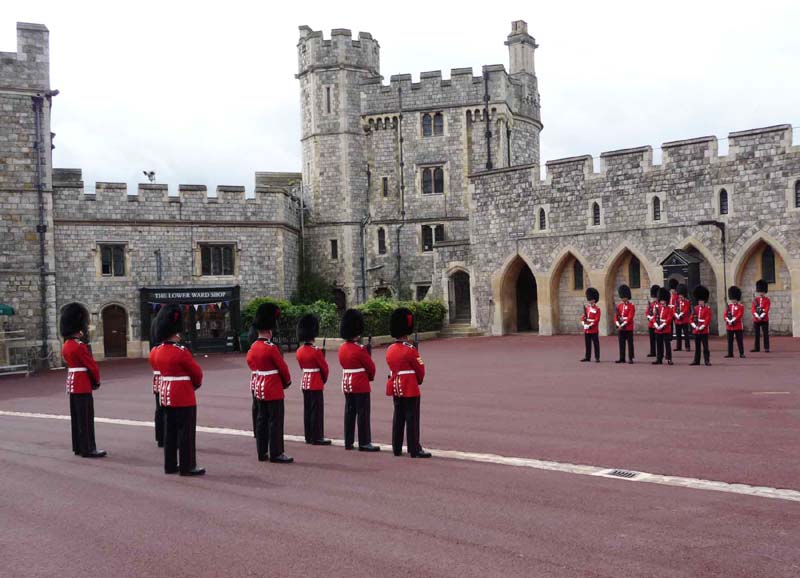 Pageantry and tradition await us just thirty-minutes away from Paddington station. During an easy day trip from London, my husband, daughter Jessica and I hop an early train and spend an enjoyable day sightseeing in both Windsor and Eton, two historic English towns.
Windsor is best known for its castle, perched above the town for 900 years. The world’s largest and oldest working castle has served English monarchs ever since William the Conqueror built it there: King John, as he waited to sign the Magna Carta at Runnymede; imprisoning Charles I as he awaited beheading. Queen Bess renovated it; Victoria mourned Albert, her beloved husband who died here in 1861. It even sheltered the Royal family during WWII. Today, Queen Elizabeth’s royal standard flies above its 1,000 rooms when she’s in residence.
Although this remarkable castle has been altered over the years, the defensive Curfew Tower looks just like it did in 1227…but now serves as St. George’s bell tower, chiming out rousing hymns and still providing quick, private exits for the Royals!
Inside Gothic St. George’s, we locate the tombs of Henry VIII, his favourite wife Jane Seymour, Charles I, Edward VII and other notable sovereigns. An enthusiastic docent standing under an array of colorful banners tells us, “Knights of the Royal Garter meet here in these magnificent choir stalls; individual coats of arms above them symbolize their backgrounds.” Undeterred by light drizzle, we watch the ceremonial changing of the guard in the outer courtyard and listen to the regimental band belt out brassy tunes. Both to and from the castle, the Guard marches through this charming Victorian town, an eye-catching sight.
Queen Elizabeth II’s public apartments overflow with wondrous art. Queen Mary’s masterfully crafted Doll House, given as a gift in 1923, especially intrigues us. This lovely miniature palace boasts early electric lighting, five bathrooms with running water and working elevators!
Along cobblestone streets leading away from the castle, we pass many little teashops, as well as antique and silversmith shops. Nell Gwynne, the mistress of Charles II, once lived on Church Street, very close to her Royal lover’s chambers! After taking a look at Christopher Wren’s elegant Guildhall and Crooked House Tea Rooms next door, we stroll the pedestrian bridge across over the picturesque Thames River to Eton’s hallowed grounds.
Just along the High Street we come to Eton College, one of the world’s most exclusive boys schools. Founded by eighteen-year-old Henry VI, this elite public school has educated generations England’s greats since 1440; ancient desks and benches bear the graffiti of hundreds of noted Etonians, including Prime Ministers Walpole, Duke of Wellington and Pitt the Elder; poets Thomas Gray and Percy Bysshe Shelley; writers George Orwell, Aldous Huxley and Ian Fleming; multi-talented actor Hugh Laurie…and Prince William, second in line to the British throne.
Mid-way between Eton College and Windsor Castle, we pop in for a ‘posh’ meal at Gilbey’s bar also on the High Street…and catch one of the many trains travelling this popular route back to London.
Getting There:
- Trains from Waterloo or Paddington Station: www.nationalrail.co.uk
- Tourist Information: www.windsor.gov.uk
About the Author:
Chris Millikan is a freelance writer/photographer living near Vancouver, BC. As a former teacher and elementary school principal, Chris now presents articles as an inviting ‘curriculum’ depicting the joys of travel. Many BC community newspapers, Open Road Driver Magazine and Senior Living Magazine regularly publish her articles. In-flight Magazines, the Vancouver Sun and Province have also featured her stories. As BC Association of Travel Writers Vice President, she supports colleagues’ aspirations. And traveling off the beaten track with writer/photographer partner and hubby Rick, their published tales reflect great adventures. Their 2009 Kalama Award acknowledged an array of their stories reflecting the rich culture of Maui, Molokai and Lanai.
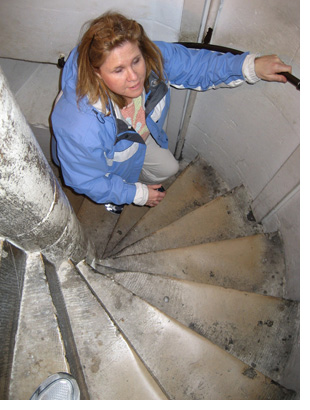 It feels like we’re heaven-bound while trekking up the stone stairwell that spirals from the ground floor of St Paul’s Cathedral to its glittery cupola dome.
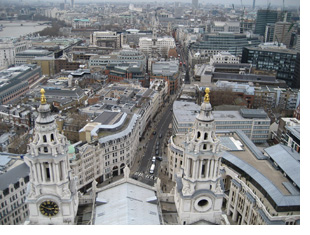 On our first day to this vibrant metropolis we had ogled over his work at Hampton Court, a stately palace to a number of past Royalties, most notoriously being Henry VIII. Although this big-bellied fellow with the sketchy nuptial history had long since departed by the time Wren was commissioned, the palatial halls and great Tudor kitchens are certainly reminders of his reign.
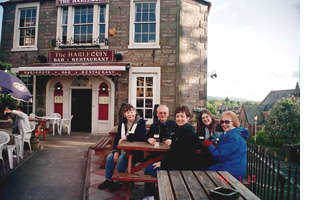 Edinburgh Castle and the 12th century Palace of Holyrood, both open to visitors, stand at each end of the historic Royal Mile. Between them, centuries-old buildings with shops and pubs and museums make it a great walk in the old city.
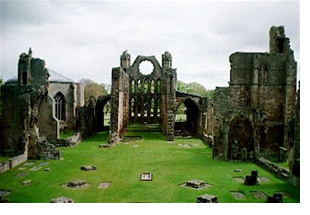 The drive to Inverness began with visiting 13th century Elgin Cathedral, still beautiful as ruins, its window fragments framing blue sky.
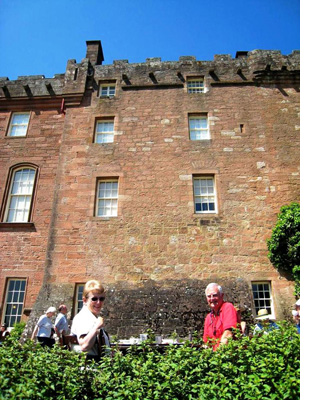 Our self-guided tour drew us into a time capsule of Scottish Baronial life and uncovered a veritable treasure house of art, porcelain and silverware. Afterwards we meandered through the 65-acre woodland Country Park and alongside pastures dotted with Highland cattle.
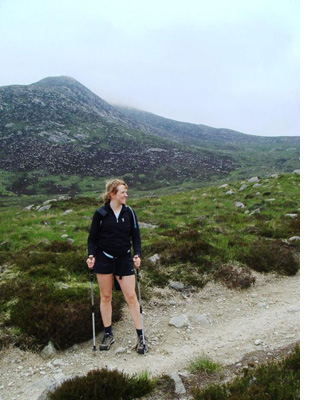 From here we walked along a track to the Bronze Age stone circles at Machrie Moor which are evocative of Stonehenge. Unfortunately we weren’t the only visitors. Clouds of pesky midges descended upon us and our flailing arms did nothing to keep them at bay.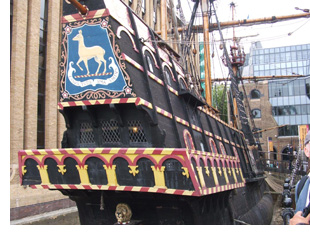
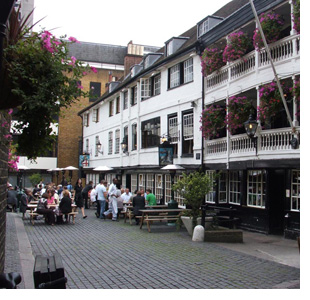
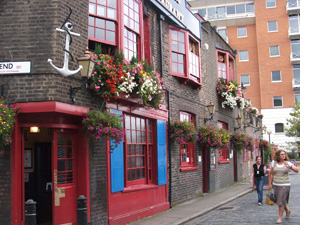 Next, head along Clink Street to the historic Anchor pub for coffee or something a bit stronger. There has been a tavern on this site for 1,000 years. This magnificent multi-level building is a riot of creaking floorboards, oak tables and leaded casements, and is everything you’d expect of Olde England.
 The contemporary theatre-going experience was a world away from today’s luvvies and wine parties. The playwright Christopher Marlowe was involved in a street fight with a man who was killed, and he himself was murdered in a tavern brawl in nearby Deptford. One Bankside theatre-goer was stabbed to death by an usher after questioning the price of admission.
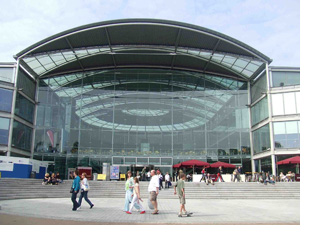
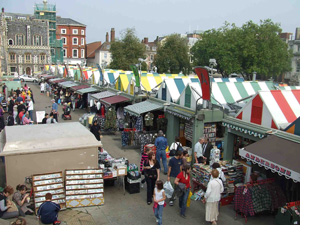 Emerging from Upper Goat Lane, with the cheerful, stripy awnings of Norwich market below us, we crossed over towards the Forum; the city’s impressive glass covered Millennium library and media centre.
 Highlights for us were a tour of the dank, cramped maze of dungeons where prisoners were kept festering in the dark, views over Norwich from the ramparts, and the outstanding collection of landscapes by artists from the Norwich School art movement of the early 1800s.
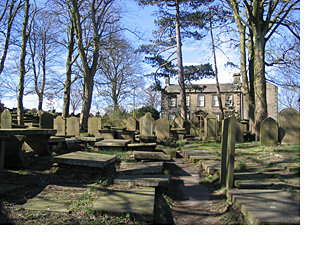 The parsonage where the girls grew up has been carefully converted into the renowned Brontë Parsonage Museum. Each room is filled with furniture and the belongings of the family, creating the atmosphere that most closely resembles what their lifestyle would have been like.
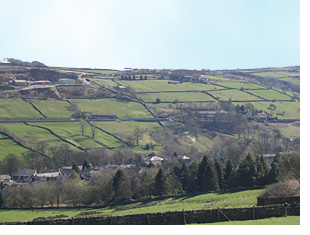 For the most devoted fans, what is now called Brontë Country spans from Bradford to the Lancashire Pennine moors. This area was explored by the sisters throughout their lives, becoming a large part of their novels. Here are the most celebrated sites that have Brontë associations:
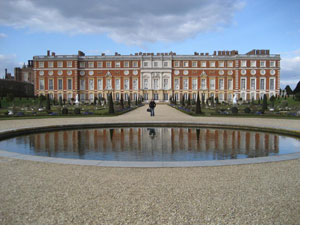 Ham House is the perfect place for spectres. The isolated Stuart mansion hugs up to the River Thames, and when nighttime falls, its Tutor silhouette takes on an ominous glow.
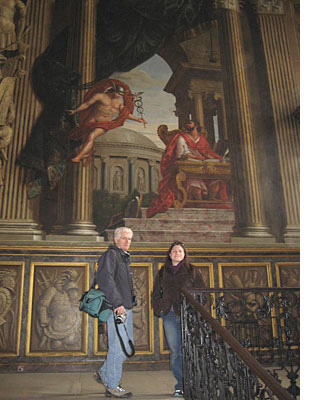 Just beyond the arboretum, is the celebrated Cherry Garden, an orangery and the scene of, yes, more ghostly sightings. After hearing about love-crushed servants and returning World War I heroes, we’ve had our fill of phantom fun-at least until the following day.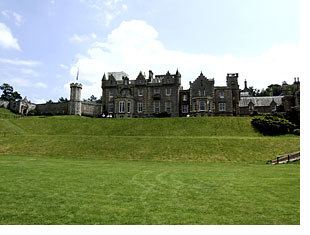
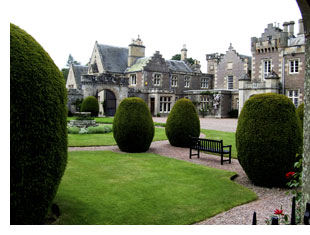 It is not so much a castle as a large manor house decorated with battlements and gargoyles.
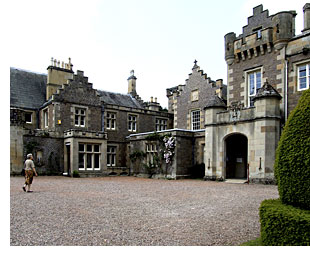 Many of the pieces have historical connections, so consult the guidebook as you crane your neck at the flashing steel. Amongst other manly equipage, there are Sir Walter’s blunderbuss and pistols; Rob Roy’s sporran purse, dirk and broadsword; James VI’s hunting bottle; and the keys of Lochleven Castle, thrown into the loch after the escape of Mary Queen of Scots.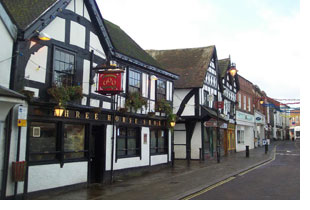
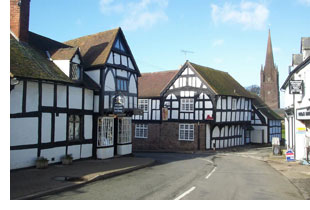 From Dilwyn, we went on to Weobley. From the moment we approached, past a fascinating ‘pink-and-black’ house, it was obvious that this particular village is something really special.
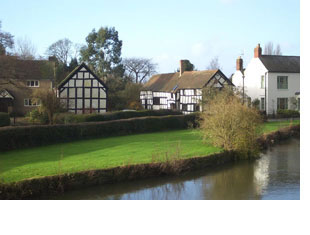 The last main village on the trail is Eardisland which, in 2004 was claimed to be the prettiest in Herefordshire. Eardisland is the proud possessor of the only-known pre-war AA box, which is displayed in the centre of the village.