Ask someone who recently applied for a Schengen visa what the hardest part was and almost nobody says the forms. They say they could not get an appointment.
That single step is where most of the delay, most of the stress and a fair number of cancelled trips live. It is also the step travel guides cover in one line, usually “book your appointment early”, which is true and completely unhelpful.
Here is the practical version.
Why appointments are scarce, and whether that changes
The European Commission published its 2025 figures in May 2026. Consulates across the EU and Schengen-associated countries received more than 12 million short-stay visa applications that year, up 4.3 percent on 2024 and 18.5 percent on 2023. More than 10 million visas were issued and the global refusal rate was 14.6 percent.
Now the comparison that explains the queue. In 2019, before the pandemic, the same network handled 17 million applications. Demand has been climbing back toward that level for three years. Processing capacity has not moved with it.
The shortage is structural. It is not a backlog that clears, and it is not worse this month than it will be next month for any reason you can wait out.
How slots actually reach the booking page
Two supplies, and they behave completely differently.
Batch releases. A consulate converts its capacity into slots and pushes them out in blocks, often early on a weekday, local time. Those blocks are taken within minutes. If you check the calendar at a convenient evening hour, you are sampling the empty state between batches, every time.
Cancellations. Every booked appointment belongs to someone whose passport might be delayed or whose leave might be refused. Those slots return one at a time, at random hours, all day. In a month that displays as fully booked, cancellations are the realistic way in.
The difference matters because only one of them can be scheduled. You can find out when your centre releases batches and be there. You cannot predict a cancellation, which means catching one requires being present at an unknown moment across weeks.
That is a coverage problem, not a willpower problem. It is the reason a schengen visa appointment bot exists as a category: software watches the calendars continuously and sends an alert when something opens, so the waiting is done by a machine rather than by a person taking days off work.
Five things that widen your odds
Check every centre your country operates. Many countries run more than one application centre. Availability between them varies enormously, and a centre a few hours away with a slot next week beats a local one booked out for six. The travel costs you a day.
Ask whether the embassy takes direct applications. Some embassies accept certain categories directly, bypassing the outsourced visa centre. It is rarely advertised and not universal, but the question costs one phone call and the answer is either a second queue or a quick no.
Take an inconvenient slot. An 8am appointment on a Wednesday in another city is still an appointment. People decline these waiting for something better, and better does not arrive.
Move the dates before you move anything else. April to August is the crush. Late autumn and January are markedly easier, and shifting a trip by six weeks changes availability more than any other single decision.
Get the appointment before the documents. Financial evidence usually has to be dated within three months of the appointment, so paperwork gathered early expires. Most people do this backwards because assembling documents feels like progress.
Which consulate you are allowed to apply to
Worth knowing, because a lot of bad advice circulates here.
The EU Visa Code decides it, not you. The member state that is your main destination examines the application, measured by nights spent or by the purpose of the trip. Only where no main destination can be determined does the country of first entry take over.
So picking a consulate because it has slots free, or because you read that it approves more applications, is not a strategy. It is an application to an office that cannot decide your case.
The rule does contain a legitimate nuance: purpose can identify the main destination even when another country holds more nights. A documented conference or family visit can be the principal purpose of a trip with a longer stopover elsewhere. That needs paperwork showing the purpose, not a claim on the form.
What to have ready before a slot appears
A slot found is not a slot booked. Most booking systems hold your selection for ten to fifteen minutes while you complete the form, and if that window closes the slot goes back to the pool.
So the work that makes a cancellation catchable happens beforehand: the application form completed and saved or its reference number to hand, passport details stored somewhere you can copy from, a working card ready for the service fee, and agreement in advance about which dates you will accept. None of it is difficult. All of it is impossible to do in ten minutes under pressure.
The costs to plan for
The adult Schengen visa fee rose from 80 euros to 90 euros on 11 June 2026, and the Visa Code allows the level to be reviewed every three years. On top of that sits the visa centre service charge, which varies by country and operator.
You also need travel medical insurance with a minimum of 30,000 euros of cover, valid across every Schengen state, covering the full stay including medical repatriation. That is a legal condition of the visa rather than an optional add-on, and a certificate that does not state repatriation in plain words is a common reason a file is handed back.
None of it is refundable if the application is refused, which is a reasonable argument for spending twenty minutes reading a policy rather than five filtering by price.
The timing boundaries
Fixed, and applied at every consulate. You may lodge an application no earlier than six months before travel and no later than 15 days before it.
The six-month figure gets misread as generous. It governs when you may apply, not when you can get through the door, and only the second one is scarce.
What to do first, if you take one thing from this
Start on the appointment months before you start on anything else, keep your dates loose for as long as you can, and put something in place to watch the calendar during the hours you cannot.
The people who get the trip they planned are almost never the ones who tried hardest at the end. They are the ones who let the appointment set the calendar instead of the other way around.
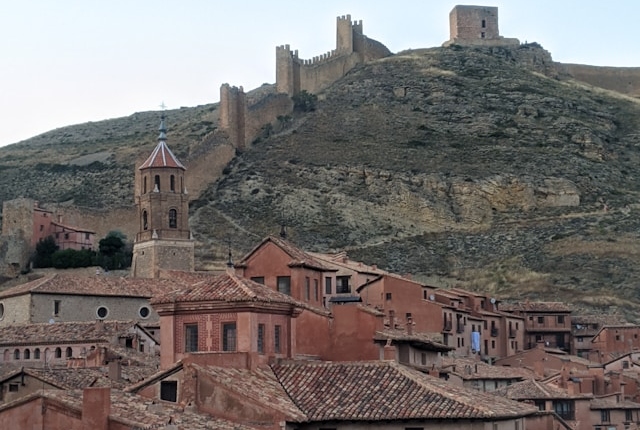
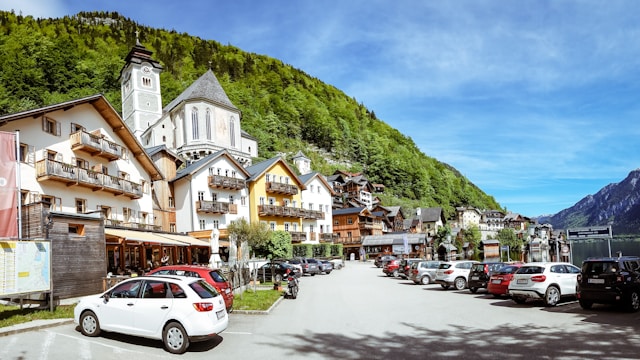
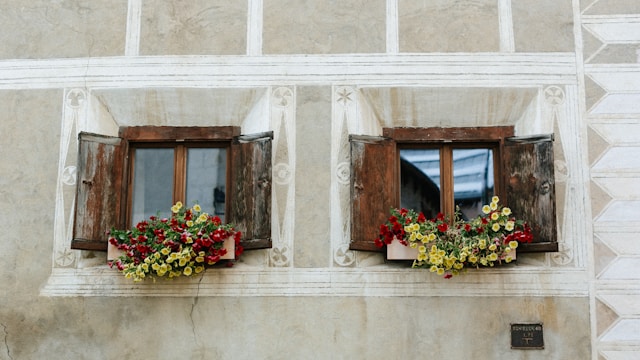

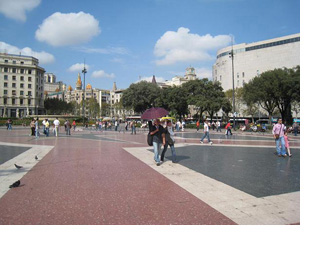 Being neophytes in this north eastern Spanish city, we set off the next morning for the Plaza de Catalunya, a huge square bedecked with fountains—the Spanish equivalent of London’s Trafalgar Square.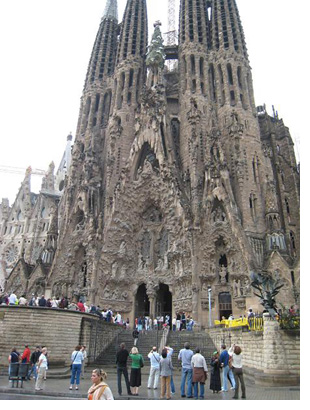
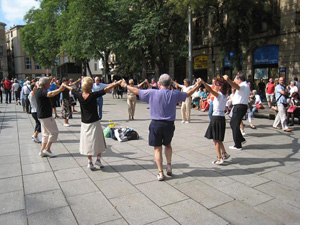 Following the strains of a lively orchestra, we found ourselves in a square overshadowed by a huge Gothic cathedral. We had stumbled upon the sardana, Catalonia’s national dance. Since visitors are welcome to join the ever-widening circles, I tried to participate in the hops, skips and jumps, but my unskilled footwork left much to be desired.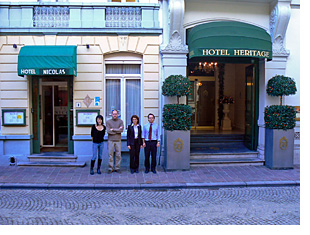
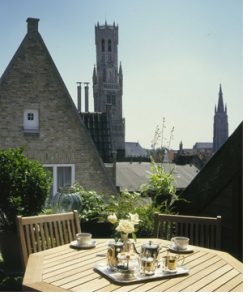 The Heritage provides all the amenities its four-star designation promises, from a sumptuous breakfast buffet in a beautiful salon setting to rooms you’re thrilled to get back to after a long day of playing Jo(e) Tourist. A standard room currently goes for 140 euros single and 152 euros double. Breakfast is an extra 15 euros per person.
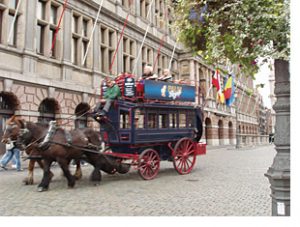 The Heritage and Nicolas, as is the case with many other Bruges hotels, offer special rates and extra goodies like a canal boat ride and other perks during the festival to get you into the mood for a chocolate spree.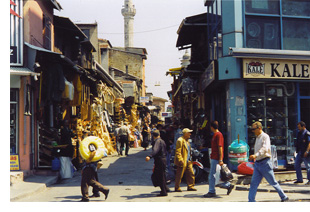
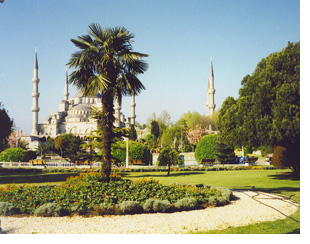 The adjacent Sultan Ahmet or ‘Blue’ Mosque ranks among the world’s most famous religious shrines. The only mosque featuring six minarets, worshiper Aydin explains the legend behind this uniqueness. “The Sultan instructed his architect to build the minarets of gold. However, recognizing the prohibitive cost, the architect switched the words for gold (altin) and six (alti).”
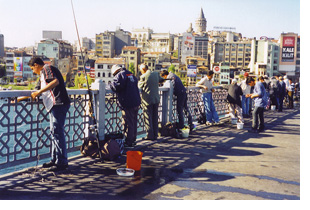 Istanbul’s charm is rooted in its blending of modernity with relics centuries old. Spanning Ataturk Boulevard, the Valens Aqueduct, stretches nearly a kilometre, once providing water to the imperial palaces. Today the two-storey aqueduct appears like a giant toll booth, several lanes of traffic passing beneath its arches.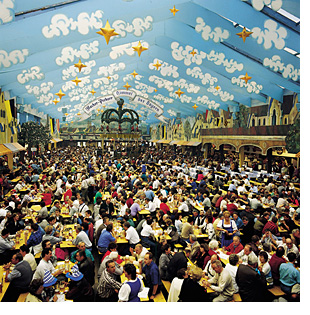
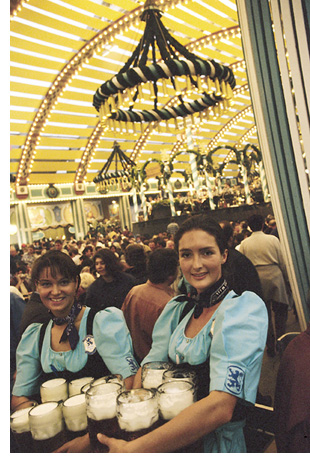 A bar maid wearing a traditional bust-popping dirndl – walked by our section. Why not grab, “Ein maß bitte?”
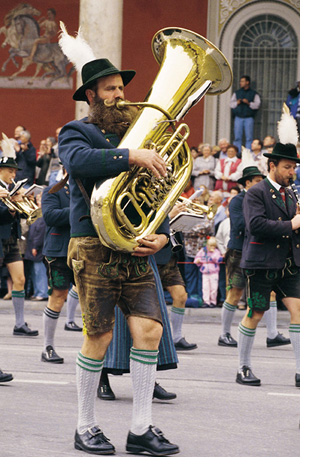 Thousands of locals still attend the event. Many tend to stick to the more traditional tents, while the younger Bavarians and backpacker crowd gravitate to tents like Hoffbrau, which has a reputation for being one of the wildest of the bunch.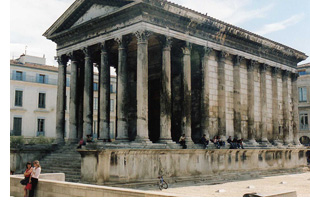
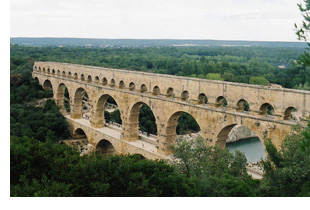 Then there is the castellum, the central water distribution point of a remarkable waterworks network intricately associated with a wonder of the ancient world. That wonder is a 49 kilometre aqueduct which brought water from distant Uzes.
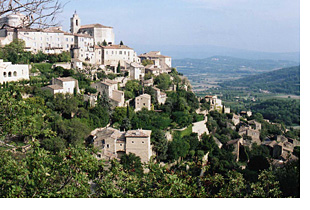 The village and ruined fortifications of Les Beau de Provence, sculpted from the hills looming high above vineyards and olive groves, attest to a dramatic history.
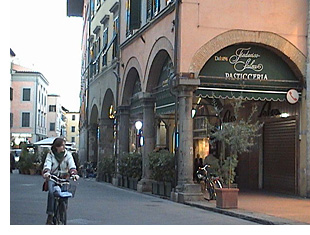 The neighborhood’s look is a sublime blend of arched cobble-stoned streets, Gothic churches and Romanesque palazzos infused with the vibrant energy of young bike-riding students.
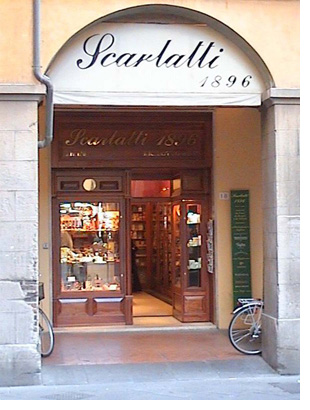 Another diversion around the corner from my hotel was The Borgo Stretto, the historic center’s main walkway where 19^th century storefronts offered enticing displays of shoes and lingerie, gelato and candies.